
Grafana Labs: Top 10 moments of 2025


For Grafana Labs, 2025 was a year defined by innovation, growth, and the power of our community.
We celebrated the release of Grafana 12 at our 10th annual GrafanaCON event, and marked major milestones across open source projects, including Mimir, k6, Beyla, Faro, and Alloy.
It was also a year of taking bold steps forward in how teams interact with their systems and data. With the launch of our actually useful AI-powered agent Grafana Assistant, our end-to-end Adaptive Telemetry suite, and Grafana Cloud Knowledge Graph, we continued on our mission to make observability smarter, easier, and more accessible to everyone.
Just as importantly, 2025 was a year of strengthening the bonds across our global community. We expanded our presence in Japan and shared insights from more than 1,200 practitioners from around the world in our third annual Observability Survey.
“It’s really satisfying for me to sit back and realize that we’ve become a force in open source observability, but we’ve done it as part of this wider community and wider ecosystem,” said Raj Dutt, CEO and co-founder of Grafana Labs, at GrafanaCON this year.
Here’s a look at some of the top moments that defined 2025 at Grafana Labs.
1. Actually useful AI with Grafana Assistant
If you don't mention AI, are you even a tech company?
At Grafana Labs, though, AI is much more than the latest observability trend. It’s become essential to how organizations keep their systems running, and we want it to play a pivotal role in simplifying the observability experience for every user.
Grafana Assistant — our AI-powered agent in Grafana Cloud — deeply reflects this belief. What started as an internal hackathon project at the beginning of the year quickly evolved into a generally available feature that lets you query, build, and troubleshoot faster using natural language.
We’ve seen teams use it for simplified onboarding, faster debugging, and easier dashboard building for every use case. (The color-coded Taylor Swift eras dashboard? Assistant helped build that.)
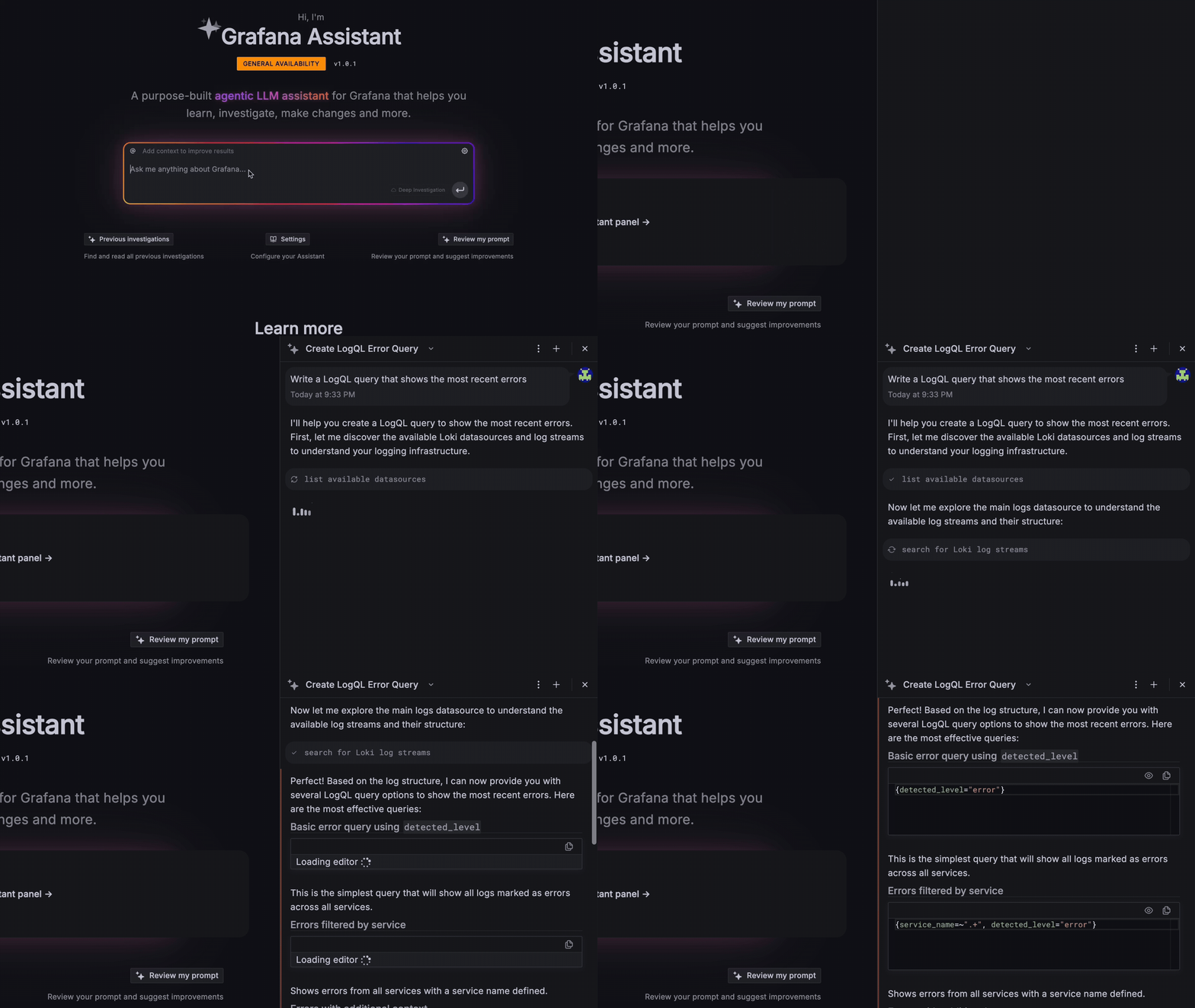
The best part? We’re just getting started. We’ve also rolled out Assistant Investigations (in public preview), an AI-powered feature that extends Grafana Assistant to accelerate multi-step incident investigations.
For more information, check out our Assistant docs.
2. Grafana 12 release and more OSS milestones
Even as the observability market moves at warp speed, one thing remains constant for us: open source software will always be part of our DNA.
“We really believe, and continue to believe, that open source is going to win, and is ultimately the best way to develop software,” Raj told attendees at GrafanaCON 2025, where we launched Grafana 12.
The latest major release introduced powerful observability as code features, such as Git Sync and dynamic dashboards. There were also some fun data visualization updates (who doesn’t love a new dashboard theme?!) and an expansion of our Grafana Drilldown suite of applications for queryless, point-and-click data exploration.
Many of our other open source projects hit major milestones this year — milestones we couldn’t have reached without the support of our OSS community.
- Mimir 3.0: This major release delivers dramatic improvements in reliability, performance, and cost efficiency, marking a new era for the open source, horizontally scalable, multi-tenant time series database (TSDB).
- k6 1.0: k6 1.0 rolled out with TypeScript support, revamped test insights, and clear support and versioning guarantees to power the next decade of performance and reliability testing.
- Beyla 2.0: The latest major release of our vendor-agnostic, open source eBPF zero-code instrumentation tool introduced performance and functional improvements — like support for new protocols and distributed tracing — along with deeper alignment with the OpenTelemetry project (spoiler alert: more on that below).
- Faro 2.0: Released in November, v2.0 of the Faro Web SDK introduces improvements to Web Vitals, simplifies configuration, cleans up deprecated internals, and more to provide a more streamlined and performant user experience.
- One-year anniversary for Alloy: In May, we celebrated one year of Grafana Alloy, our open source OpenTelemetry collector with built-in Prometheus pipelines and support for metrics, logs, traces, and profiles.
You can read more about OSS updates on our blog.
3. OpenTelemetry eBPF Instrumentation: Beyla donated to the OTel project
Over the years, we’ve prioritized contributing to the OpenTelemetry project and building compatibility with OpenTelemetry into our products and open source projects. Beyla is a leading example of both of those efforts.
This year, with the support from both Grafanistas and the open source community, we officially donated Beyla to OpenTelemetry, under the new project name OpenTelemetry eBPF Instrumentation (commonly referred to as OBI). It was a special moment for us, and one that marked a significant milestone in the evolution of zero-code eBPF instrumentation within the open source community at large.
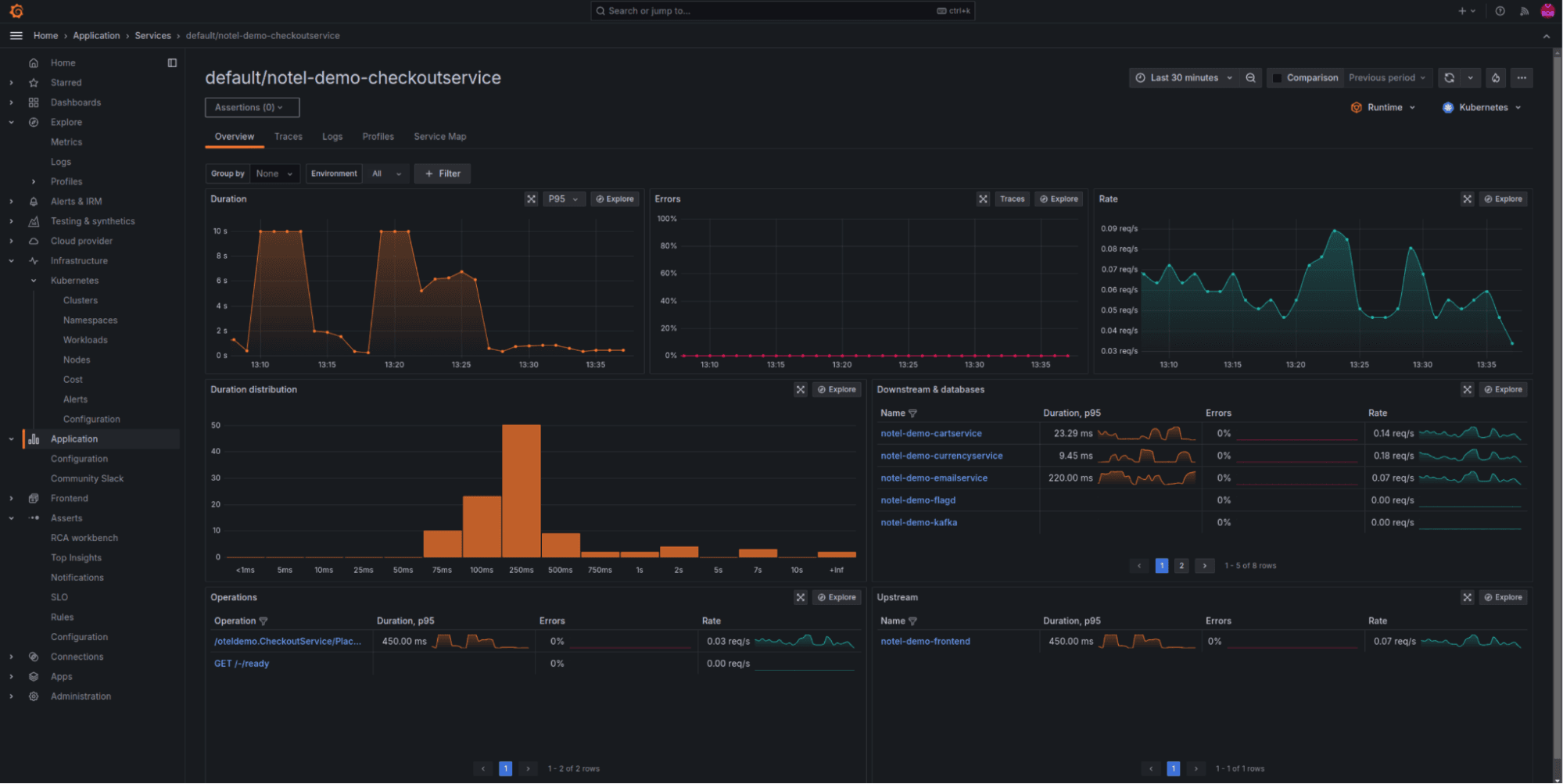
As part of the donation, we announced that Beyla will continue to exist as Grafana Labs’ distribution of the upstream OpenTelemetry eBPF Instrumentation. In August, we rolled out Beyla 2.5, the first Beyla release where we directly vendored most of the code from the upstream repository.
Looking ahead, we’re excited to continue collaborating and driving further innovation around zero-effort instrumentation within the OTel community.
To learn more about OpenTelemetry eBPF Instrumentation, visit OpenTelemetry docs.
4. First-ever "Science Fair" at GrafanaCON
There were no exploding volcanoes, but there were 3D printers and plenty of IoT devices.
Our 10th annual GrafanaCON featured our inaugural Science Fair, a series of interactive booths—complete with tri-fold poster boards—where attendees could check out and play with projects demonstrating all the different things you can monitor with Grafana. Highlights included the team from PRUSA monitoring a 3D printer (mini Grots for everyone!); a desktop wind tunnel built for model race cars created by Grafana Labs CTO Tom Wilkie; and the hackathon booth, where attendees could get hands-on with popular projects from Grafana Labs hackathons, like Dash Dash Revolution and Doomfana.
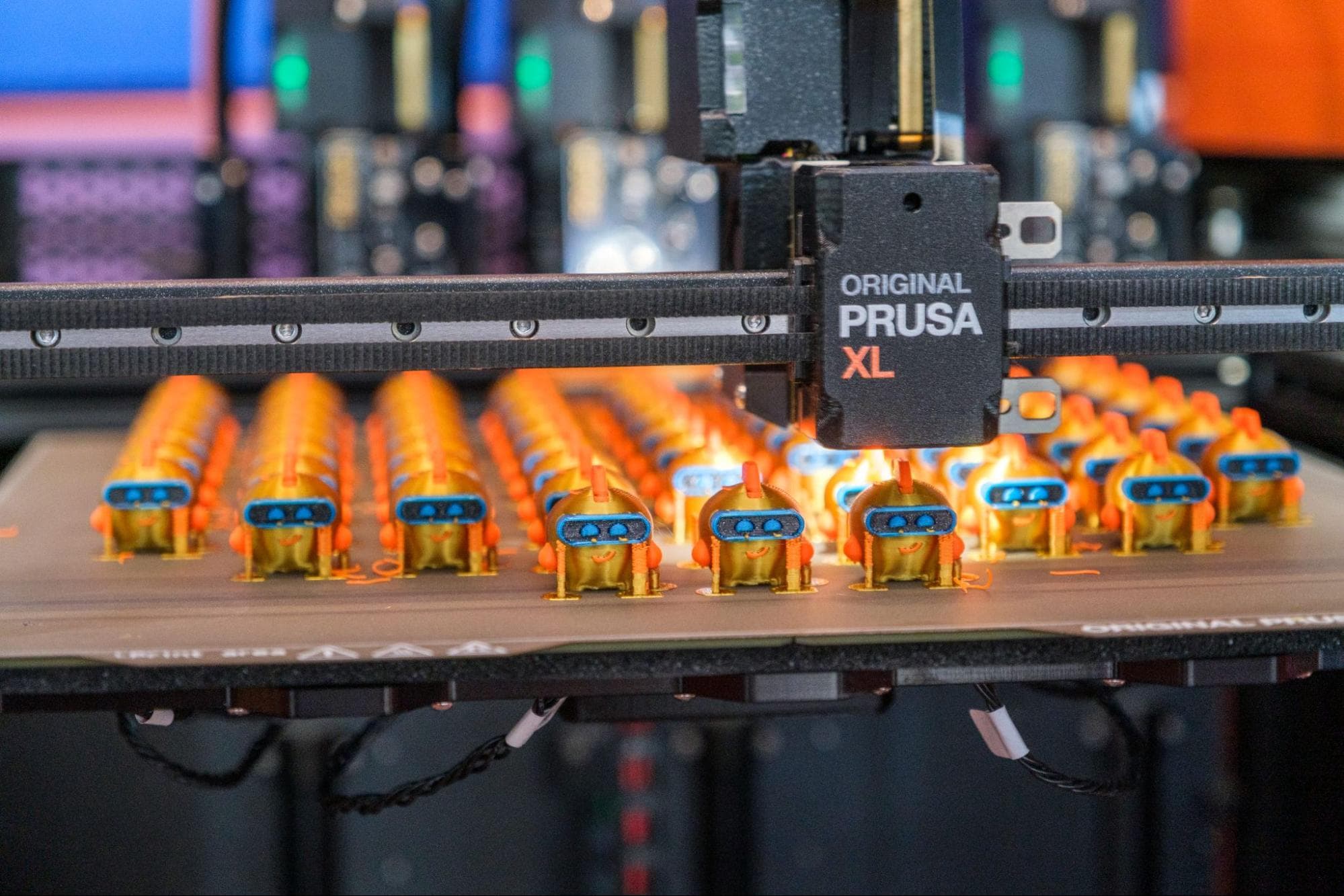
In addition to the Science Fair, GrafanaCON 2025 featured more than 32 live sessions, our Ask the Experts booth, hands-on labs, a welcome reception, and more fun, community-driven activities.
Want to get in on the action next year? Be sure to sign up to get notified when discount tickets are available and get an early heads-up about all the topics we'll be highlighting at GrafanaCON 2026, which will take place April 20-22 in Barcelona.
5. Named a Leader in the Gartner® Magic Quadrant™ for Observability Platforms (again!)
Grafana Labs is proud to be recognized as a Leader in the 2025 Gartner® Magic Quadrant™ for Observability Platforms for the second year in a row.
This year’s report placed Grafana Labs furthest to the right of the Magic Quadrant for “Completeness of Vision,” which we believe reflects our deep commitment to building a full-stack open observability platform that gives users flexibility, control, and the tools to own their observability strategy.
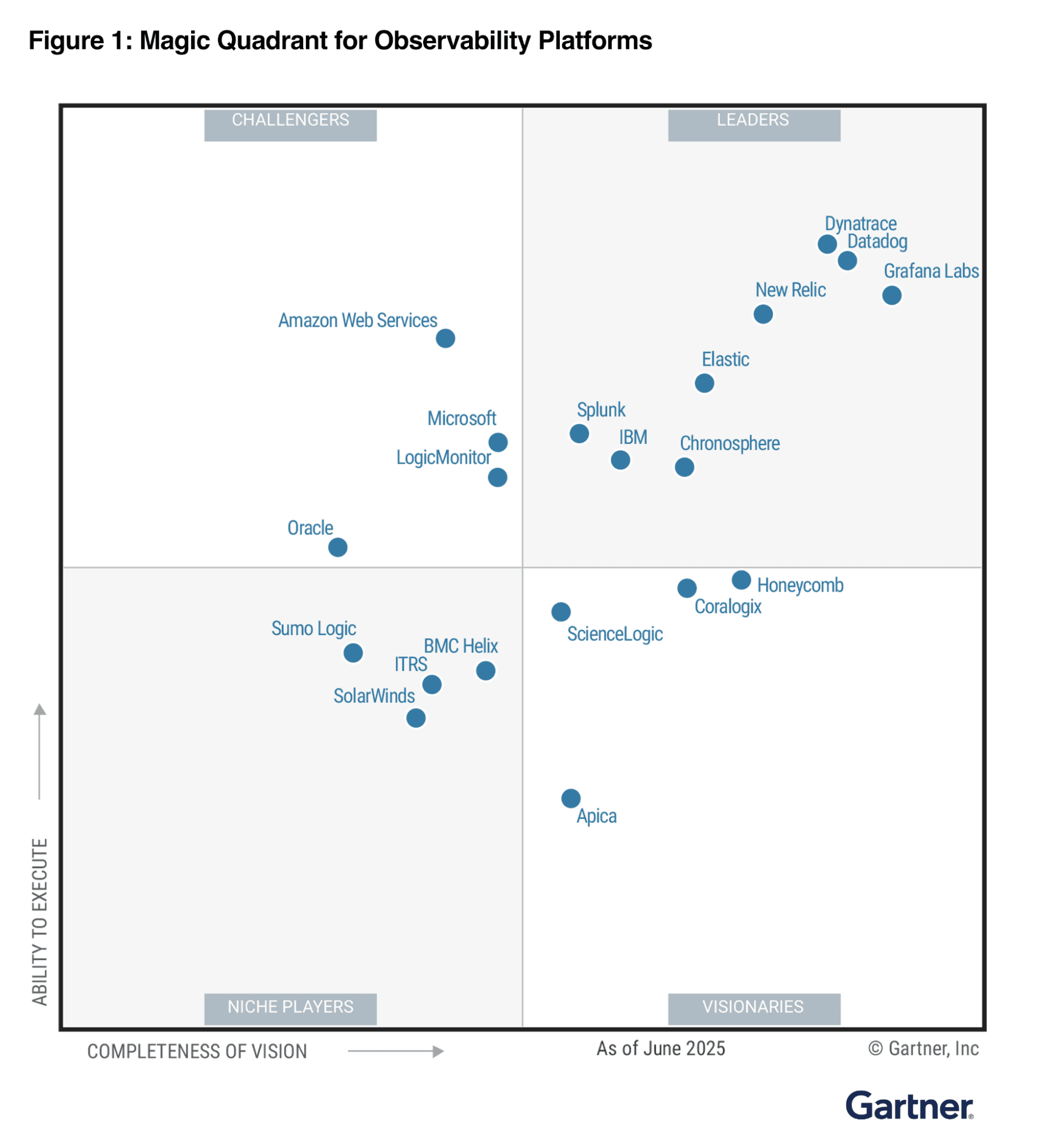
This was one of several recognitions in 2025 that demonstrated how our company and community is playing a vital role in shaping the future of observability. We were also honored to be included in:
- The Forbes Cloud 100 list, which recognizes the top private cloud companies in the world; Grafana Labs ranked number 13.
- The Silicon Valley Defense Group’s NATSEC100, which ranked Grafana Labs 26th out of “the top 100 venture-backed, dual-use and defense technology companies driving forward U.S. national security.”
While we’re proud of these accolades, we’ll always consider our users’ success to be the ultimate validation of our products.
“We're so privileged to be at the center of this really dynamic and vibrant ecosystem and community,” Raj said at ObservabilityCON 2025.
6. The end-to-end Adaptive Telemetry suite
More observability data doesn’t always bring more clarity — in fact, it often just creates more noise and costs. That’s why we built Adaptive Telemetry, a set of features in Grafana Cloud that optimizes observability data by ensuring only the most valuable telemetry is stored and surfaced. It uses intelligent classification and prioritization techniques to analyze how telemetry is used and then automatically recommends actions like aggregating, sampling, dropping, or reducing low-value data.
Our Adaptive Telemetry suite started with Adaptive Metrics and Adaptive Logs, and this year expanded to include:
- Adaptive Traces (generally available): Automatically identifies and retains your most valuable traces using tail sampling to deliver critical performance insights.
- Adaptive Profiles (private preview): Dynamically adjusts data collection based on workload behavior, enabling continuous profiling at scale without high costs. Sign up here to join our private preview.
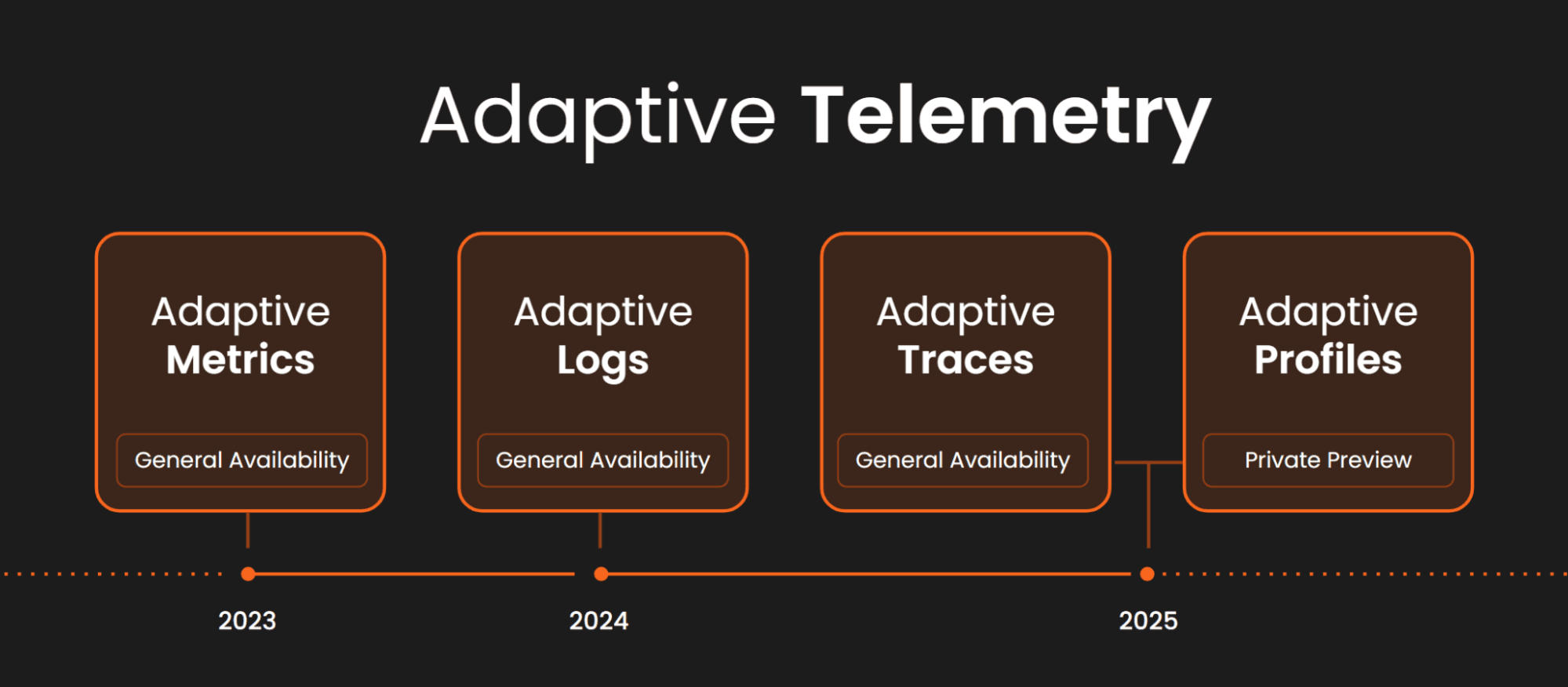
“Before Adaptive Traces, we had two bad options: send everything and blow our budget, or send so little we couldn’t get meaningful insight,” said Geoff Schultz, Manager, Infrastructure Engineering at Auditboard. “Now tracing is actually usable. We can dial sampling up or down as needed, keep costs in check, and still give teams the visibility they need.”
With this end-to-end Adaptive Telemetry suite, you can extend the benefits of the adaptive model across all core pillars of your observability strategy, ensuring every piece of telemetry you store is truly worth the investment.
Check out our documentation to learn more about Adaptive Telemetry.
7. Introducing Grafana Labs Japan
Whether it’s attending community meetups, developing Grafana data sources, or even monitoring the country's first moon landing, our users and partners in Japan have been an active and integral part of the broader Grafana community.
That’s why we were excited to announce the establishment of Grafana Labs Japan, a new subsidiary in Tokyo, this year. With this investment, we strengthen our ability to deliver localized support, foster closer collaboration with Japanese enterprises and partners, and accelerate digital transformation initiatives across the region.

“At Grafana Labs, open is not just our strategy; it’s our differentiator. With our open and flexible observability platform, we help organizations see and understand anything from anywhere — turning signals into smarter, faster action. We are excited to extend this vision to more organizations in Japan," said Raj.
8. Extending the Grafana Cloud stack
We are consistently shipping new features for Grafana Cloud in an effort to make our hosted open observability platform more efficient, intelligent, and easier to use.
In addition to Grafana Assistant and the end-to-end Adaptive Telemetry suite, here are some other ways we’ve evolved Grafana Cloud in 2025 to enable more powerful, full-stack observability strategies.
- Knowledge graph: By combining telemetry from across your system’s apps, databases, and infrastructure into a single intelligent map, the knowledge graph helps you reduce MTTR and find root causes faster.
- Grafana Federal Cloud: FedRAMP High authorized and DoD IL5 compliant, Grafana Federal Cloud offers organizations secure and reliable cloud-based monitoring for their infrastructure, applications, and services, ensuring data protection and compliance with stringent security standards.
- Service Center: This unified hub in Grafana Cloud offers a service-first view of system health to help you improve service reliability and operational culture.
- Database Observability: By tracking every query across your databases and easily correlating queries with app and infrastructure signals, this solution (shown below) makes database troubleshooting faster and easier.
- Instrumentation Hub: This point-and-click experience allows you to automatically discover instrumentation gaps and deploy observability coverage at scale.
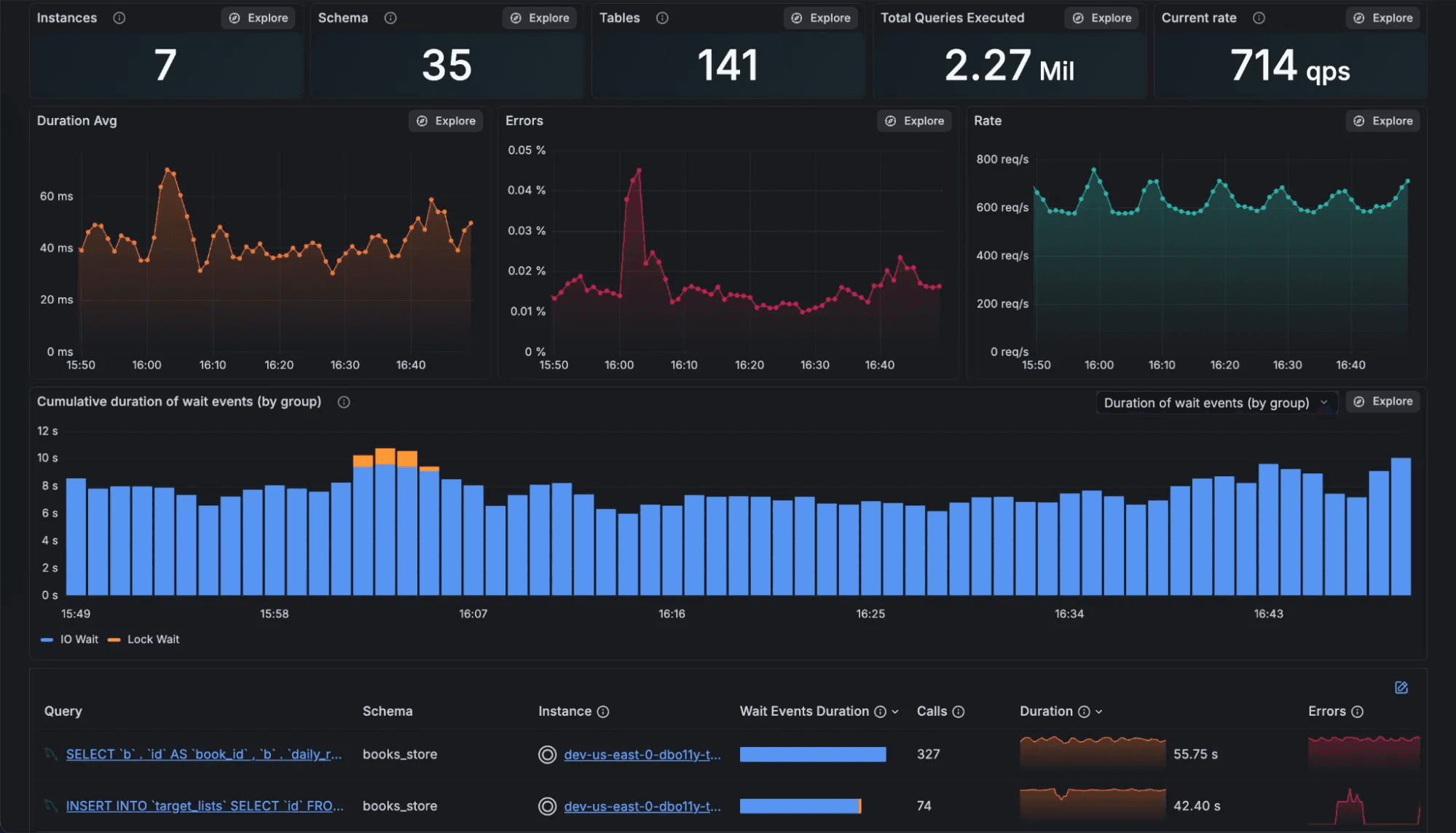
You can read more about these and other new features in our Grafana Cloud blog posts.
9. The third annual Observability Survey
Across companies of all shapes and sizes, observability practices are maturing and getting attention at the highest levels. At the same time, cost and complexity continue to hinder efforts as teams look to emerging tools to help simplify their processes in hopes of better outcomes.
These were some of the key findings from the third annual Observability Survey brought to you by Grafana Labs. In total, we collected 1,255 responses online and at industry events around the world (that's 4x more than last year!), making it the largest community-driven survey on the state of observability. We also produced versions of the survey for Brazil and Japan to better understand how organizations there are adopting observability, and to share that information with the community.
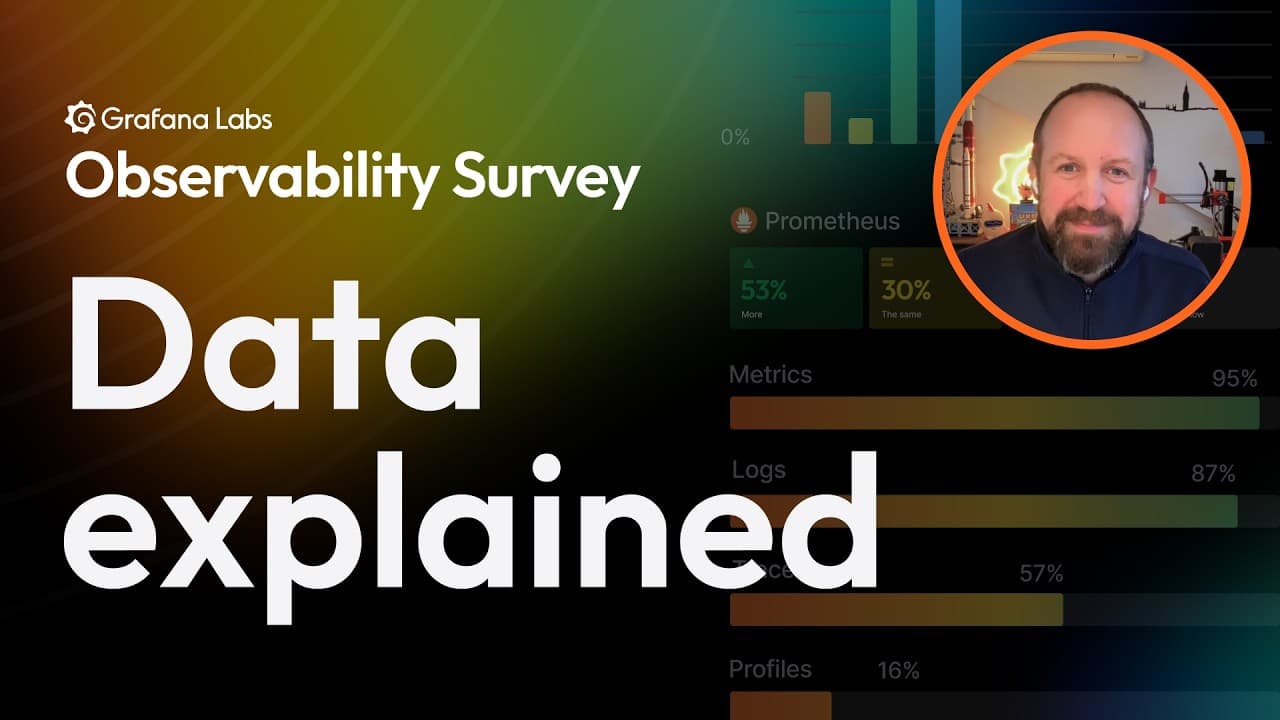
The survey helps us better understand the state of observability, but we also see it as an asset for our community and the broader industry. The report is free (no email required!), and this past year we added an interactive Grafana dashboard where you can dig into the numbers, too.
Didn’t get to participate in the survey last year? No worries — we are still collecting responses for next year's survey. It only takes a few minutes, all responses will be kept anonymous, and you could win some swag.
10. Raising the bar on growth
In September, Grafana Labs completed a secondary transaction led by Ontario Teachers’ Pension Plan, with participation from Sapphire Ventures and Tiger Global. Existing investors Lightspeed Venture Partners, GIC, Coatue, Sequoia Capital, CapitalG, and Lead Edge Capital also took part.
It was one of several moments that underscored our growing momentum in the observability market. We also surpassed $400 million in annual recurring revenue and grew to more than 7,000 global customers. Today, some of the world’s most recognized companies — from Anthropic and NVIDIA to Salesforce and Microsoft — rely on Grafana Labs to power their observability strategies.
“This is really an incredible accomplishment,” Raj said on stage at ObservabilityCON. “We really appreciate you helping us get to that number.”
And that’s a wrap! Of course, we couldn’t have hit any of these milestones without our incredible open source community. Thank you for continuing to support and inspire us, and we can’t wait for a new year filled with fresh ideas, shared wins, and even deeper connections.
Gartner®, Magic Quadrant™ for Observability Platforms, By Gregg Siegfried, Matt Crossley, Padraig Byrne, Andre Bridges, Martin Caren, 7 July 2025
GARTNER is a registered trademark and service mark of Gartner, Inc. and/or its affiliates in the U.S. and internationally, MAGIC QUADRANT is a registered trademark of Gartner, Inc. and/or its affiliates and is used herein with permission. All rights reserved.
Gartner does not endorse any vendor, product or service depicted in its research publications and does not advise technology users to select only those vendors with the highest ratings or other designation. Gartner research publications consist of the opinions of Gartner’s Research & Advisory organization and should not be construed as statements of fact. Gartner disclaims all warranties, expressed or implied, with respect to this research, including any warranties of merchantability or fitness for a particular purpose.
This graphic was published by Gartner, Inc. as part of a larger research document and should be evaluated in the context of the entire document. The Gartner document is available upon request from Grafana Labs.