

Capabilities |  |  |
|---|---|---|
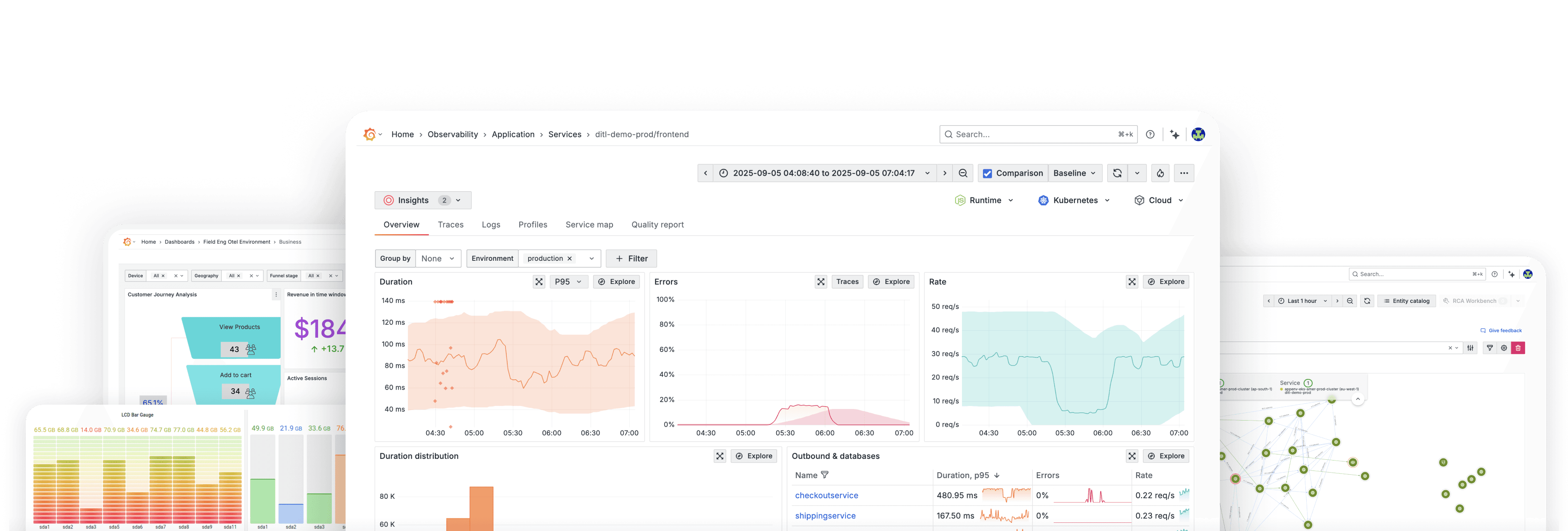
Resolve where your signals live | Keep on-call, routing, and incidents inside Grafana Cloud IRM so a page opens beside your dashboards, logs, and traces. Send an incident or alert to Grafana Assistant for AI-powered investigation, then post the findings back to the incident timeline. Learn more | Chase context across tools after the page lands. An incident opens in a separate console, then troubleshooting usually means pivoting back to your monitoring, logs, and traces to rebuild the story across tabs and handoffs |
Open by default (OTel & Prometheus) | Deploy your Grafana Alloy collector (100% OTLP, Prometheus pipelines), ingest signals once, then route them into alerting, on-call, and incident workflows so response starts with context. Learn more | Trigger incidents from your OpenTelemetry-based monitoring, but rely on those tools to collect metrics, logs, and traces—PagerDuty isn’t the telemetry store. |
Predictable IRM cost | Bill by monthly active IRM users (people on your schedules/escalations or taking IRM actions) so cost tracks to who actually responds. Learn more | License your responders by seat and bolt on extras (e.g., Runbook Automation, AIOps) so spend follows headcount and add-ons as teams scale. |
Page to fix in one view | Open your alert beside dashboards/logs/traces in an incident workspace and cut noise with grouped notifications for the first responder. Learn more | Mobilize your responders and run automations, then pivot to external dashboards/tools for investigation through integrations. |
Works with your stack | Pull in signals from the monitoring you already run, then sync incident work into Slack, Jira, ServiceNow, and GitHub so the tools your teams live in stay aligned. ServiceNow sync is bidirectional, and GitHub issues stay in sync with incident details, while the incident timeline stays in Grafana. Learn more | Route events from 700+ tools into paging, then coordinate tickets and comms across separate systems as the incident evolves. That split workflow creates handoffs where context and status can drift. |
Guided investigations with AI | Utilize the Knowledge Graph for contextual, automated root-cause analysis and Grafana Assistant Investigations to correlate metrics, logs, traces, and profiles within your workspace. Learn more -> | Purchase PagerDuty AIOps to reduce noise and orchestrate events across your services. |
Switch fast, keep control | Define your on-call schedules, escalations, routes, and integrations as code with the Grafana Terraform provider, then follow the PagerDuty-specific migration path to cut over service-by-service without breaking paging. Keep changes reviewable in git, and keep coverage intact while you switch. Learn more -> | Operate today with APIs/Terraform, but expect manual mapping when moving configurations to a new target. |

PagerDuty vs. Grafana Cloud
Fix incidents faster where your signals live
Respond to incidents right next to your dashboards, logs, and traces — no context-switching or vendor lock-in, just open standards like OTLP/PromQL and pricing based on active responders, not seats.
Trusted by everyone from startups to the Fortune 500









Looking for the PagerDuty plugin? Monitor PagerDuty data within Grafana.
Visit plugin pageWhy teams choose Grafana Cloud over PagerDuty
You shouldn’t have to jump between tools during an incident. With on-call management and automated investigations alongside your telemetry, engineers move from reactive firefighting to fast, evidence-driven resolution.
Pay for responders, not seats
Align your IRM spend to who actually responds: Grafana bills by monthly active IRM users, while PagerDuty prices per seat and layers paid modules as you scale.
“Prezi calculated tens of thousands of dollars per year in savings by switching from PagerDuty to Grafana IRM, with comparable functionality.”
Shorten the page-to-fix loop
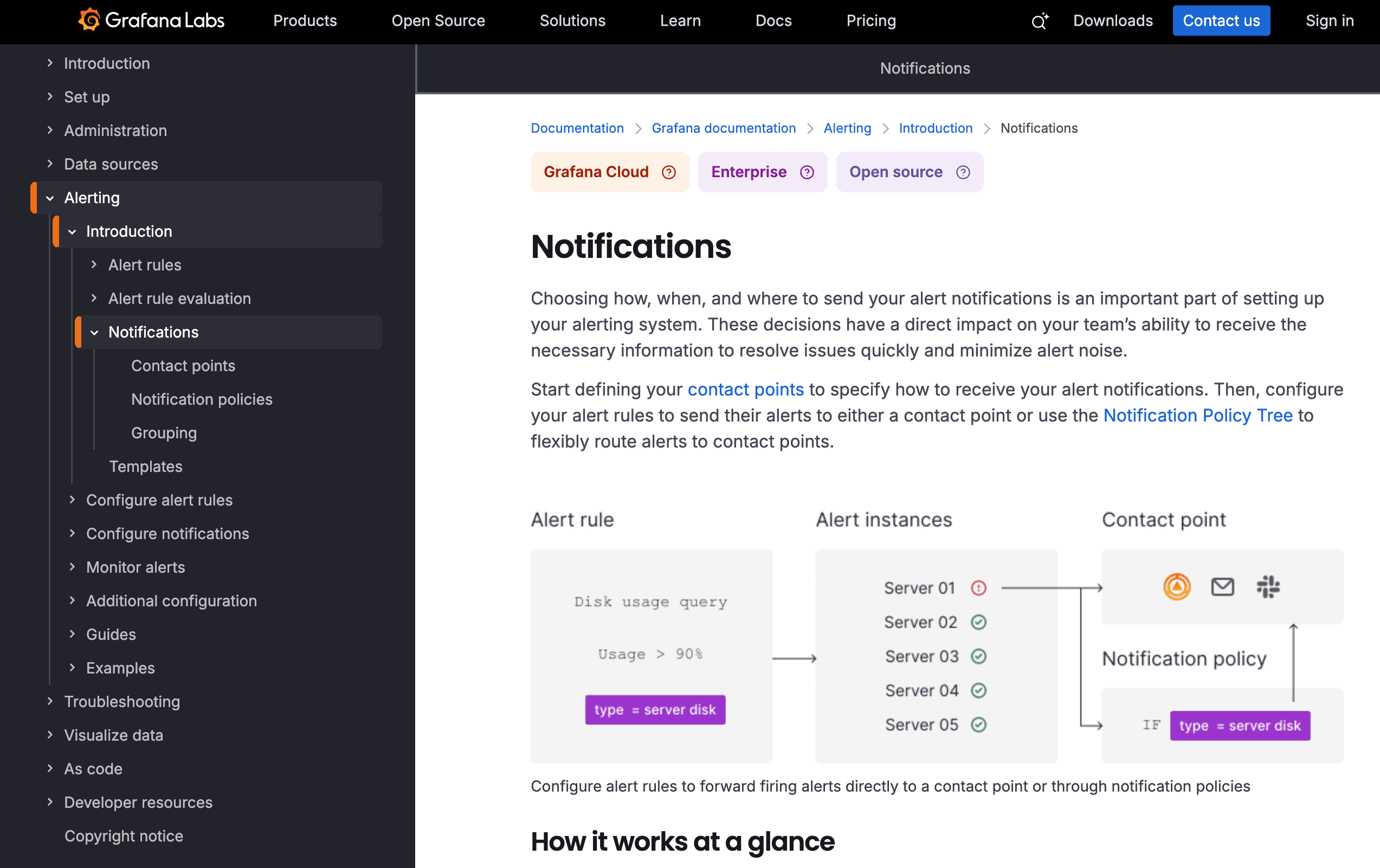
Manage incidents alongside your dashboards, logs, and traces in Grafana Cloud IRM so responders stay in one place, and group alert notifications so related alerts batch into fewer messages instead of flooding on-call during an incident.
“Observability is about knowing what’s really meaningful in the data so that you can eliminate noise … It’s about being able to correlate and proactively drive towards actionable insights rather than just reacting to every alert.”
Migrate from PagerDuty in weeks, not quarters
Automate your PagerDuty migration with our open-source IRM migrator tools, or hand it off to Grafana Professional Services, then run co-exist → cutover and switch services one at a time without losing paging coverage.
Instrument once and alert with context
Keep your OpenTelemetry/Prometheus setup and let Grafana run telemetry and incident response together in one place, so every page opens next to your dashboards, logs, and traces. PagerDuty waits for other tools to send an alert and doesn't show the data that caused it.
“We eliminated closed-source agents and standardized on OpenTelemetry and Micrometer, so we control the data, avoid lock-in, and can change again if we need to.”
Grafana Labs: A Leader in the 2025 Gartner® Magic Quadrant™ for Observability Platforms
Gartner evaluated 20 vendors based on their Ability to Execute and Completeness of Vision, and Grafana Labs was positioned furthest in Completeness of Vision.

Gartner®, Magic Quadrant™ for Observability Platforms, By Gregg Siegfried, Matt Crossley, Padraig Byrne, Andre Bridges, Martin Caren, 7 July 2025
Gartner and Magic Quadrant are a trademark of Gartner, Inc., and/or its affiliates.
Gartner does not endorse any company, vendor, product or service depicted in its publications, and does not advise technology users to select only those vendors with the highest ratings or other designation. Gartner publications consist of the opinions of Gartner’s business and technology insights organization and should not be construed as statements of fact. Gartner disclaims all warranties, expressed or implied, with respect to this publication, including any warranties of merchantability or fitness for a particular purpose.
This graphic was published by Gartner, Inc. as part of a larger research document and should be evaluated in the context of the entire document. The Gartner document is available upon request from Grafana Labs.

Scope & identify
Align on a migration timeline
Set and agree on key outcomes
Identify potential blockers early
Build open communication channels

Define & design
Define observability requirements
Catalogue existing observability assets
Develop a migration blueprint
Design Grafana best practices for your organization


Ready to try Grafana?
Whether you’re trying to cut costs, simplify your stack, or just get more out of your telemetry, Grafana Cloud can help.



Welcome to
The open observability cloud
Built on open source, open standards, and open ecosystems
The Free Forever plan
Create free accountPlans to suit every scale
Explore Cloud plans