Slide 2 of 7

Where database monitoring fits

Observability builds in layers
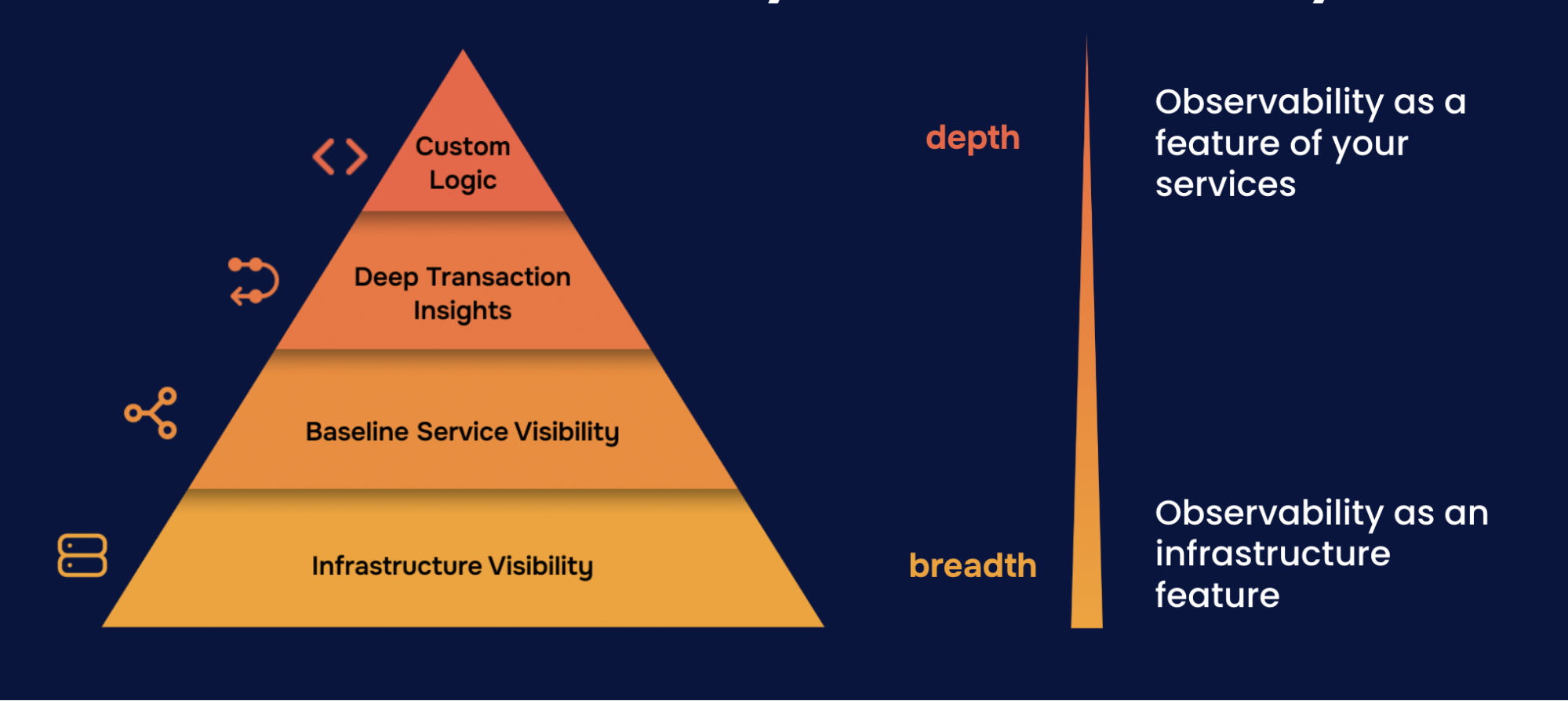
Hierarchy of observability needs

Database monitoring is foundational

LevelFocusQuestion answered
Level 1Infrastructure“Is my server healthy?”
Level 1Databases“Is my database healthy? Which queries are slow?”
Level 2Services“Which service is the problem?”
Level 3Transactions“Why is this request slow?”
Level 4Custom logic“What’s happening in my code?”

Databases sit at the foundation of your observability stack. Application performance depends on database performance. If your database is slow, your application is slow.

Without visibility into query performance, connection usage, and replication health, troubleshooting application issues means guessing.

Script

Before diving into the specifics, it helps to understand where database monitoring fits in the broader observability picture.

Observability builds in layers, starting with infrastructure at the foundation and moving up through services, transactions, and custom instrumentation. Database monitoring sits right at that foundation. If your database is slow, your application is slow, and every layer above it suffers.

Without visibility into query performance, connection usage, and replication health, troubleshooting application issues means guessing. You might see elevated response times at the application layer, but the root cause could be a missing index or a connection pool that’s exhausted.

That’s why database monitoring is one of the first things to set up. It gives you the visibility you need to diagnose problems quickly instead of working backward from symptoms.