Slide 2 of 7

Where cloud provider observability fits

Observability builds in layers
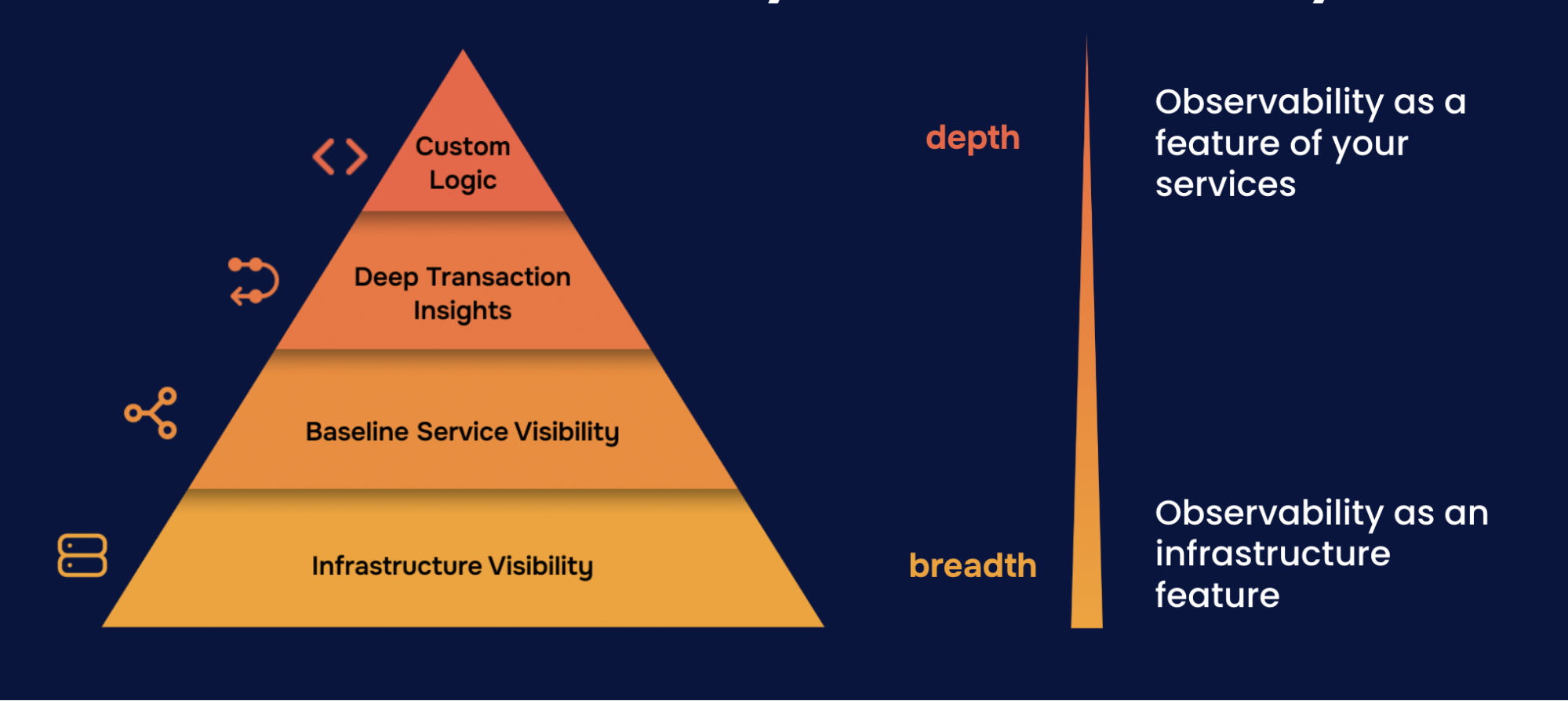
Hierarchy of Observability Needs

LevelFocusQuestion answered
Level 1Infrastructure“Is my cloud healthy?”
Level 2Services“Which service is the problem?”
Level 3Transactions“Why is this request slow?”
Level 4Business logic“What’s happening in my code?”

Key takeaway

Cloud provider observability gives you Level 1 visibility into your AWS, Azure, and GCP infrastructure.

You can’t troubleshoot services if you don’t know your cloud is healthy. Cloud provider observability builds that foundation.

Script

Before we dive into cloud provider observability, let’s zoom out and understand where it fits in the bigger picture.

Observability isn’t one thing. It’s a hierarchy of needs. At the foundation, Level 1, you need infrastructure visibility. Can you see if your servers, databases, and networks are healthy? This is the base everything else builds on.

At Level 2, you shift focus to services. Which service is causing the problem? At Level 3, you dig into individual transactions. Why is this specific request slow? And at Level 4, you add custom instrumentation for business-specific questions.

Here’s the key insight: cloud provider observability gives you Level 1 for your cloud infrastructure. Whether you’re monitoring AWS, Azure, or GCP, you’re building the foundation that answers “Is my cloud infrastructure healthy?”

You can’t troubleshoot service issues if you don’t know your cloud resources are healthy. Cloud provider observability builds that foundation. That’s why we’re starting here.