


























Full cluster-to-pod visibility for container orchestration
| Level | What’s monitored | Key metrics |
|---|---|---|
| Cluster | Control plane, etcd, API server | Availability, latency, pressure |
| Nodes | Kubelet, node resources | CPU, memory, disk per node |
| Pods | Container resources, restarts | Requests vs. usage, OOM kills |
| Workloads | Deployments, StatefulSets | Replica availability, rollouts |
| Networking | Services, Ingress, DNS | Request rates, latency, errors |
Out-of-the-box capabilities
Questions answered
| With Kubernetes Monitoring, you can answer… |
|---|
| Which pods are using the most CPU in my cluster? |
| Why did this pod crash? What were the logs before the OOM kill? |
| How much is my infrastructure costing, and where can I save? |
| What will my resource usage look like next week? |
| Which namespace is consuming the most resources? |
Problems solved
| Problem | Solution |
|---|---|
| Complex manual setup | Helm chart deployment, no manual config |
| No visibility into pod resources | Complete cluster-to-container metrics |
| Hard to debug pod crashes | Correlated logs, metrics, and automated diagnostics |
| Unpredictable costs | Built-in cost views and savings recommendations |
| Capacity planning guesswork | ML-powered CPU and memory predictions |
Script
If you’re running Kubernetes, you know how complex it can get. Pods restart, nodes get scheduled, and deployments roll out. Without visibility, debugging is a nightmare.
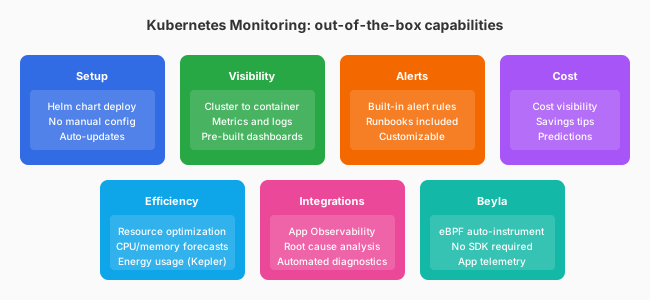
Kubernetes Monitoring is a dedicated application in Grafana Cloud that gives you complete visibility with almost no setup. You deploy using a Helm chart, and that’s basically it. No manual configuration of agents, no building dashboards from scratch.
What makes it powerful is everything that comes out of the box. You get a unified view from cluster down to individual containers. You get built-in alerts and runbooks for common issues.
You get cost visibility: see exactly what your infrastructure is spending and where you can save.
You even get ML-powered predictions for CPU and memory, so you can plan capacity before you run out.
The app also integrates with other Grafana Cloud tools. You can jump from a problem pod directly to Application Observability to see trace data, or launch automated diagnostics to help identify root cause.
It turns Kubernetes from an opaque system into something you can actually understand and optimize.