Slide 1 of 4

OpenTelemetry Protocol for logs

OTLP for logs

OpenTelemetry Protocol (OTLP) is the standard way to send logs when you’re using OpenTelemetry, through its OTLP endpoint, which routes structured logs into Grafana Cloud Logs. Teams already using the OpenTelemetry Collector or SDKs use it for a unified pipeline across logs, metrics, and traces.

If you’re setting up a collector for the first time, Grafana Alloy is Grafana’s OpenTelemetry Collector distribution and can export OTLP to Grafana Cloud. This journey covers teams already running a standard OpenTelemetry Collector.
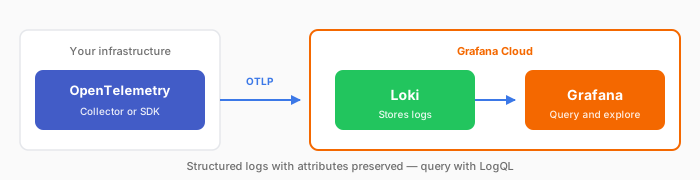
OTLP logs flow

Considerations

  • One protocol for logs, metrics, and traces, for a unified telemetry pipeline.
  • Structured logs keep their attributes when stored in Grafana Cloud Logs.
  • Requires an OTLP-compatible source (an OpenTelemetry Collector or SDK).
  • Takes more setup than the HTTP API.

Documentation

Script

OpenTelemetry Protocol, or OTLP, is the standard way to send logs if you're using OpenTelemetry. It's the same protocol used for metrics and traces, which means you can use a single endpoint and a single collector for all your telemetry.

Grafana Cloud accepts OTLP logs natively. If you’re running the OpenTelemetry Collector, you configure it to export logs to the Grafana Cloud OTLP endpoint, which routes them into Grafana Cloud Logs.

If your applications use OpenTelemetry SDKs, they can send logs directly.

If you’re setting up a collector for the first time, Grafana Alloy is Grafana’s OpenTelemetry Collector distribution and can export OTLP to Grafana Cloud. This journey covers teams already running a standard OpenTelemetry Collector.

OTLP logs include structured data like attributes, resource information, and severity levels, all preserved when they arrive in Grafana Cloud Logs. This makes querying and filtering more powerful than plain text logs.

This is the recommended approach if you’re building on OpenTelemetry or want a unified telemetry pipeline.