Slide 1 of 14

The scaling challenge

The scaling challenge

Say you need to add a new metrics scrape to your collectors, maybe you’re rolling out a new integration or collecting extra data to troubleshoot an incident. With the manual approach, you access each machine, edit its configuration file, and reload the collector, then repeat for the next one. For 5 collectors that’s tedious. For 50 it’s most of a day. For 500 it’s impossible to do consistently.

Configuration management tools like Ansible or Terraform help, but they don’t remove the work. You’re still managing deployments, testing changes, and coordinating rollouts, so every configuration change becomes its own project.
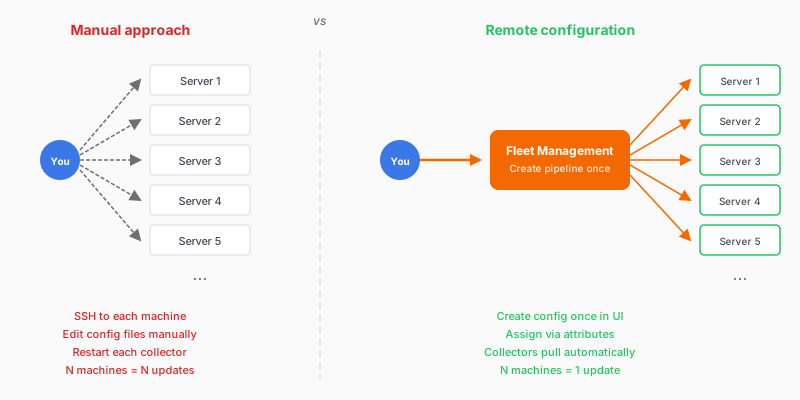
The scaling challenge: manual approach vs remote configuration

How remote configuration changes this

Remote configuration flips the model. You create a configuration pipeline once in Fleet Management and assign it to collectors by their attributes, such as all production collectors or everything in us-east. The collectors pull the new configuration automatically on their next poll cycle.

Updates per change

Approach5 collectors50 collectors500 collectors
Manual5 updates50 updates500 updates
Remote config1 update1 update1 update

Configure once, deploy everywhere. One update reaches your entire fleet.

Script

Here’s the challenge that remote configuration solves. Imagine you need to add a new metrics scrape to your collectors. Maybe you’re rolling out a new integration or collecting additional data for troubleshooting.

With the manual approach, you’d access each machine, edit the configuration file, reload the collector, and move on to the next one. For 5 collectors, that’s annoying. For 50 collectors, it’s a full day’s work. For 500 collectors, it’s impossible to do consistently without automation.

And even with automation tools like Ansible or Terraform, you’re still managing deployments, testing changes, and coordinating rollouts. Every configuration change becomes a project.

Remote configuration flips this model. Instead of pushing configs to each machine, you create a configuration pipeline once in Fleet Management. You assign it to collectors using attributes, maybe “all production collectors” or “all collectors in us-east.” The collectors pull the configuration automatically on their next poll cycle.

With remote configuration, one update reaches your entire fleet.