Slide 2 of 4

How Database Observability and integrations differ

Two different layers

A database integration and Database Observability aren’t two versions of the same product, and you don’t choose one over the other. They monitor different layers of the database and answer different questions.
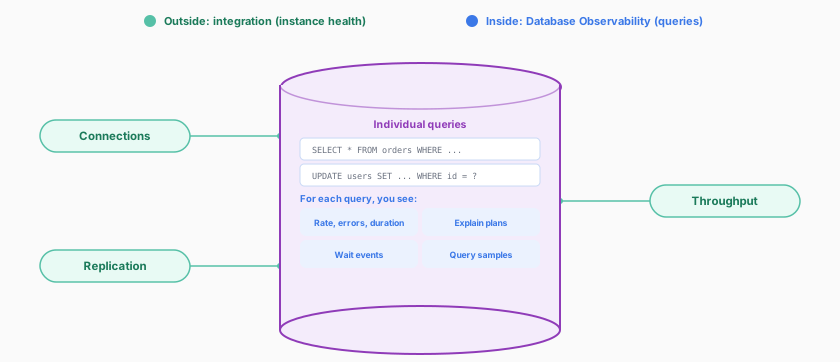
One database, two levels of monitoring: an integration watches instance-level metrics from outside, while Database Observability looks inside at individual queries

Database ObservabilityDatabase integration
What it monitorsIndividual queriesThe database instance as a whole
Question it answersHow does each query perform, and why?Is the database healthy?
What you seePer-query rate, errors, and duration, plus explain plans, wait events, and query samplesAggregate, instance-level metrics such as connections, throughput, and replication, with prebuilt dashboards and alerts
DatabasesMySQL and PostgreSQLMany, including MongoDB, Redis, Memcached, Cassandra, Oracle, MySQL, and PostgreSQL

Script

It’s worth being clear on how Database Observability and integrations differ. They aren’t two versions of the same thing, and you don’t simply choose one over the other.

A database integration monitors the health of the database instance as a whole. It comes with prebuilt dashboards and alerts for aggregate metrics like connections, throughput, and replication, and it covers many database types, including MongoDB, Redis, Memcached, Cassandra, and Oracle.

Database Observability works one level deeper, at the query level, and only for MySQL and PostgreSQL. It shows which individual queries are slow and why, with explain plans, wait events, and query samples.

Because they answer different questions, they complement each other. An integration tells you the instance is healthy. Database Observability tells you which query is slow and what to change. If you run either a MySQL or a PostgreSQL database, you can use both.