
Menu
This is documentation for the next version of Grafana k6 documentation. For the latest stable release, go to the latest version.

Open source
Concepts
These topics explain the essential concepts of how scenarios and their executors work.
Different scenario configurations can affect many different aspects of your system, including the generated load, utilized resources, and emitted metrics. If you know a bit about how scenarios work, you’ll design better tests and interpret test results with more understanding.
Was this page helpful?
Related resources from Grafana Labs

Video
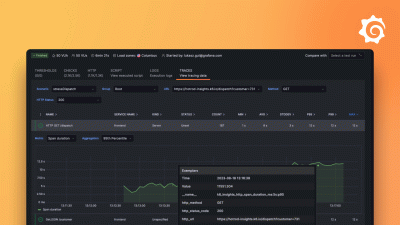
Performance testing and observability in Grafana Cloud
Optimize user experiences with Grafana Cloud. Learn real-time insights, performance testing with k6, and continuous validation with Synthetic Monitoring.
Video

User-centered observability: load testing, real user monitoring, and synthetics
Learn how to use load testing, synthetic monitoring, and real user monitoring (RUM) to understand end users' experience of your apps. Watch on demand.