
Menu
This is documentation for the next version of Grafana k6 documentation. For the latest stable release, go to the latest version.

Open source
AesGcmParams
The AesGcmParams object represents the object that should be passed as the algorithm parameter into the
encrypt and
decrypt operation when using the AES-GCM algorithm.
For more details, head to the MDN Web Crypto API documentation on AES-GCM.
Properties
Example
export default async function () {
  const plaintext = new TextEncoder().encode('Hello, World!');

  /**
   * Generate a symmetric key using the AES-CBC algorithm.
   */
  const key = await crypto.subtle.generateKey(
    {
      name: 'AES-GCM',
      length: 256,
    },
    true,
    ['encrypt', 'decrypt']
  );

  /**
   * Encrypt the plaintext using the AES-CBC key with
   * have generated.
   */
  const ciphertext = await crypto.subtle.encrypt(
    {
      name: 'AES-GCM',
      iv: crypto.getRandomValues(new Uint8Array(12)),
    },
    key,
    plaintext
  );
}
Was this page helpful?
Related resources from Grafana Labs

Video
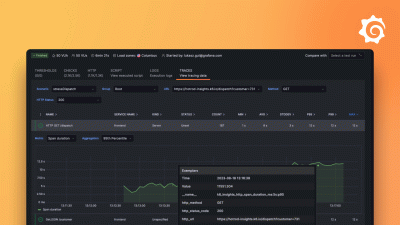
Performance testing and observability in Grafana Cloud
Optimize user experiences with Grafana Cloud. Learn real-time insights, performance testing with k6, and continuous validation with Synthetic Monitoring.
Video

User-centered observability: load testing, real user monitoring, and synthetics
Learn how to use load testing, synthetic monitoring, and real user monitoring (RUM) to understand end users' experience of your apps. Watch on demand.